The history of vermouth begins, with unusual precision, at a single address. There is a plaque in Piazza Castello, in Turin, that almost no one stops to read. It marks the place where, in 1786, a 22-year-old herbalist named Antonio Benedetto Carpano mixed his first batch of what he called vermut, after the German word for wormwood. The plaque is small, the square is loud, and the bottega itself was destroyed in the bombing of 1943. Yet the moment it commemorates is the closest thing modern drinking culture has to an origin myth — and, like all good origin myths, the details are stranger and more specific than the legend remembers.
This is a reconstruction of the place, the man, and the gesture. Drawn from court records, trade ledgers, period accounts and the patient work of Italian historians who have spent the last two decades correcting the casual telling, it is a story that begins not with genius but with a shop assistant, an aristocratic clientele, and a half-empty bottle of Moscato di Canelli.
Two and a half centuries
From a village in the Biellese to a protected name
Nine moments, from the birth of a herbalist to the codification of Vermouth di Torino. Tap a stage to learn more.
Tap or focus a stage to read it. Scroll the rail sideways to see the whole arc.
A young man from Bioglio
Antonio Benedetto Carpano was born on 24 November 1764 in Bioglio, a small village in the foothills of the Biellese, perhaps eighty kilometres north-east of Turin. By his twenties he had relocated to the Piedmontese capital, attracted, like so many young men of his generation, by the gravity of the Kingdom of Sardinia's political and commercial life. The Turin he arrived in was one of the great Enlightenment cities of southern Europe — home to a botanical garden founded in 1729, an Accademia di Agricoltura founded in 1785, and an entire University devoted to acquavitai e confettieri: distillers and confectioners.
Carpano had trained as a herbalist. In an age when the line between apothecary and beverage-maker was still blurred — when wormwood was prescribed for digestive ailments, when gentian was a cure for fever, when bitter wines were drunk as medicine before they were drunk as pleasure — that training mattered. He found work as a shop assistant in the liqueur store of Luigi Marendazzo, a confectioner-distiller whose bottega stood under the porticoes of Piazza delle Fiere, today's Piazza Castello, on the corner of Via Viotti. The shop sat directly opposite the Royal Palace.
The bottega itself
What did the Marendazzo shop look like? The most reliable accounts describe a long, narrow space under the arcades — typical of Piazza Castello's eighteenth-century commercial geometry — with shelves of demijohns, copper alembics, glass-stoppered bottles, and the rope-bound flasks of unaged acquavite that distillers used to fortify their preparations. There would have been the smell of citrus peel and clove, of wormwood drying in muslin. The shop was a destination. It served the courtiers crossing the square between the Palace and the Stock Exchange. It served the agricultural academics, the Genoese merchants, the priests of the nearby San Lorenzo. It was, in the exact sense of the word, frequentata — frequented.
"Frutto degli esperimenti e dell'intuito dell'erborista Antonio Carpano, il Vermouth nasce nel 1786 in una piccola bottega di Torino, dalla fortunata unione tra il vino ed un'infusione di erbe e radici." Smile Tree Torino, Storia e Curiosità del Vermouth
Marendazzo, by all accounts, was an indulgent employer. He let Carpano experiment. This is the small detail that matters — the one the textbooks omit. Vermouth, modern vermouth as we recognise it, was not invented by a master in his own laboratory. It was invented by an apprentice in someone else's shop, with someone else's wormwood, on someone else's stove.
The original vermouth recipe of 1786, as best we can reconstruct it
The original 1786 formula is — and remains — a trade secret, today guarded by Fratelli Branca, who acquired the Carpano name in 2001. But enough is known from contemporary sources, surviving suppliers' invoices, and the chemistry of late-eighteenth-century distillation to give a confident outline.
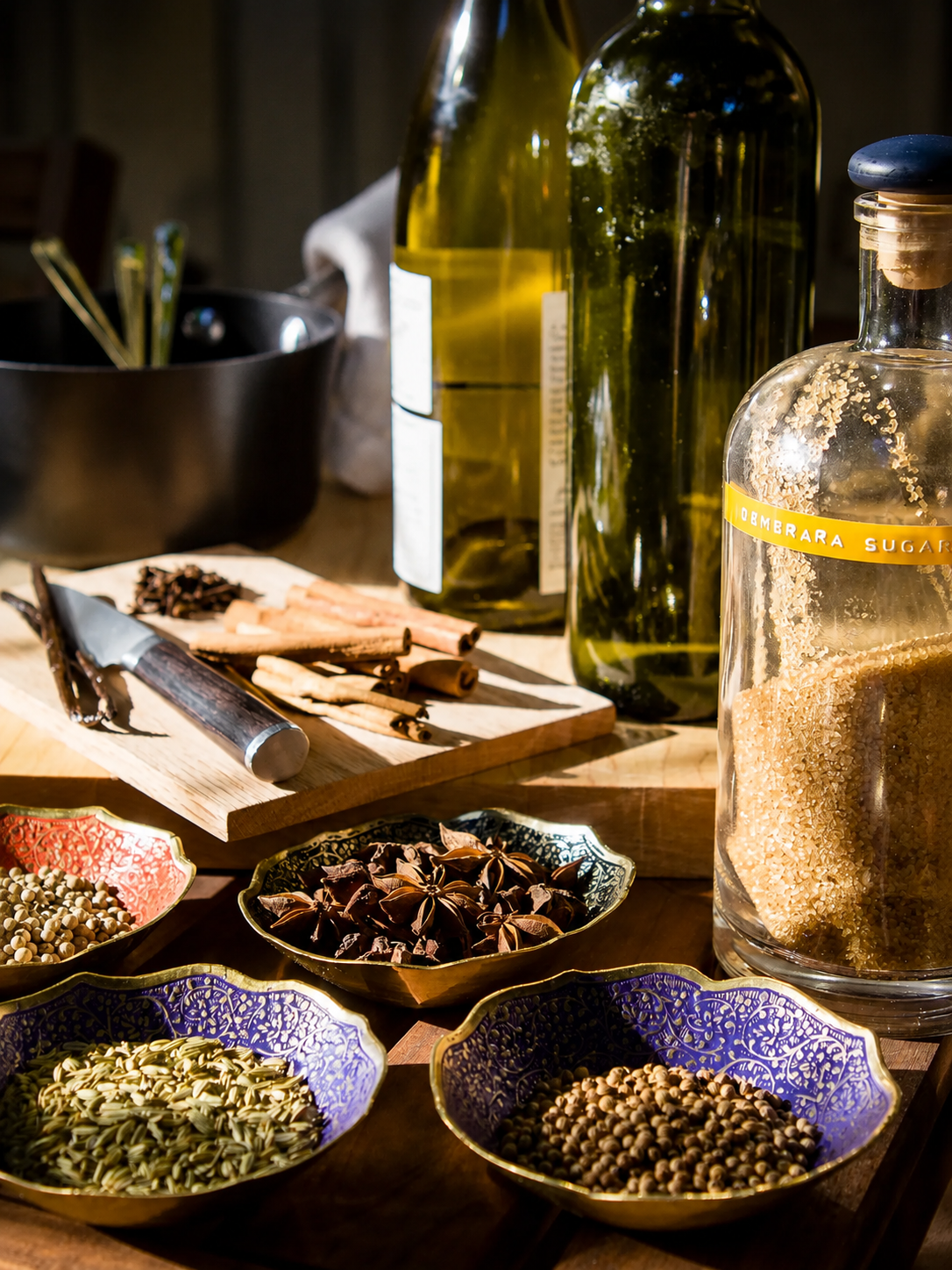
Carpano started with Moscato di Canelli, the aromatic white wine of southern Piedmont — sweet, floral, structurally light. To this base he added a small percentage of neutral grape spirit, sufficient to fortify and stabilise the wine. Then came the infusion: roughly thirty botanicals, dominated by Artemisia absinthium — wormwood — but also including cinnamon, sweet orange peel, gentian, cardamom, and a quiet thread of saffron. Sugar was added, both as sweetener and as a softening counterweight to the bitterness of the herbs.
The mixture was, in the manner of the time, filtered through fine linen and bottled by hand. The colour was an amaranth-amber. The alcohol sat between 15 and 17 per cent. The taste, as far as anyone has been able to recreate it, was richer and more medicinal than the smooth sweet vermouths of the late nineteenth century — closer, in spirit, to today's Carpano Antica Formula, which Branca markets as a faithful echo of the 1786 original.
The formula
What went into the first bottle
Filtered through fine linen, bottled by hand.
The original formula remains a trade secret, today guarded by Fratelli Branca. This is a confident outline, not a recipe — drawn from contemporary sources, surviving suppliers' invoices and the chemistry of late-eighteenth-century distillation.
The crate sent to the King
Carpano was a herbalist, but he was also a young man with the instincts of a marketer. According to the most widely cited version of events — repeated by every serious Piedmontese chronicler from the nineteenth century forward — once he was satisfied with his recipe, he had a wooden crate delivered across the square to the court of Vittorio Amedeo III, the reigning Duke of Savoy and King of Sardinia.
The gesture was characteristic of the small risks that change history. The King tasted. The King approved. Within weeks, the royal household had suspended its standing order of rosolio — a sweet rose-petal liqueur that had been the dominant aristocratic drink of the period — and replaced it with Carpano's vermut.
This is the moment vermouth becomes a category. Not when Carpano poured the first glass — that had happened weeks earlier, in private — but when the Duke of Savoy adopted it as the official aperitif of the royal table. After that, the Turin nobility followed. The borghesia followed. Within a few years, the Marendazzo bottega was reportedly open twenty-four hours a day to meet demand.
From shop assistant to founder
What happened next is less romantic and more revealing. Marendazzo, who had given Carpano the run of his shop, watched his apprentice's invention eclipse his own business. By the 1810s the relationship had inverted: Carpano was effectively the principal, Marendazzo the silent partner. By 1820, four years after Antonio's death, his nephew Giuseppe Bernardino Carpano formalised the company under the name "Fabbrica di Liquori e Vermut Giuseppe Carpano, già ditta Marendazzo e Com.ia, sotto i portici di Piazza Castello al n. 21" — a legal fiction that simultaneously acknowledged the Marendazzo lineage and erased it.
The address — number 21, under the arcades of Piazza Castello — would remain the spiritual home of Carpano until well into the twentieth century. The shop survived the unification of Italy, the Belle Époque, two world wars, and the slow decline of the Savoy monarchy. It did not survive the Allied bombing of 13 July 1943, which damaged much of the western flank of the square. By the time Italy emerged from the war, the original bottega was rubble.
What remains of Carpano's Turin today
Today, Piazza Castello is a busy crossroads. The Royal Palace still anchors the northern edge. The arcades on the western side are home to luxury retailers and cafés. The plaque commemorating Carpano is mounted at street level, easy to miss. Most tourists do.
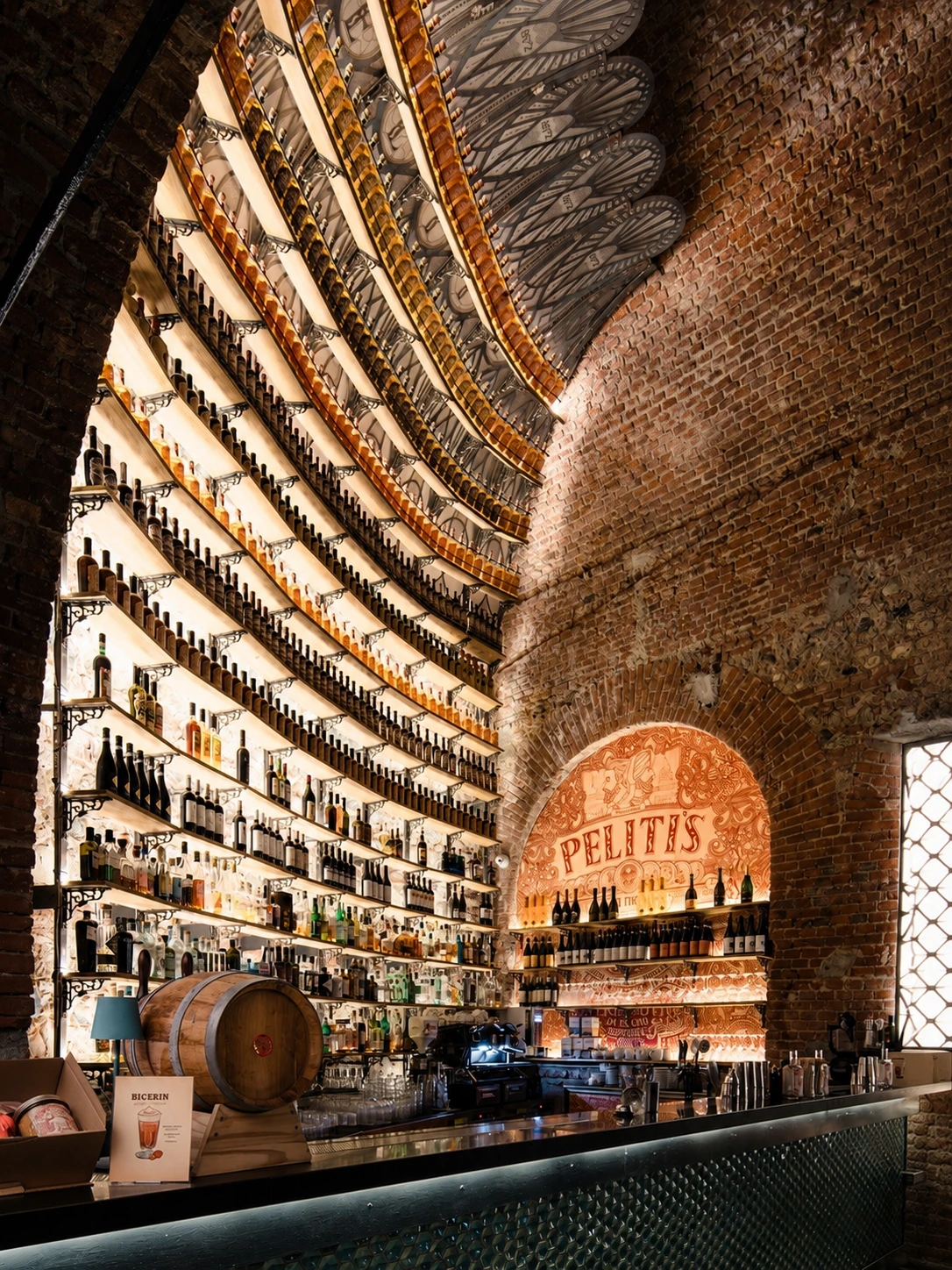
But the geography of the moment is intact. From the spot where Carpano's shop stood, you can walk in five minutes to the doors of Casa Vermouth, on the third floor of the Galleria Subalpina — itself built in 1874, almost exactly a hundred years after the first glass was poured. You can walk in another five minutes to Caffè Mulassano, where vermouth has been served continuously since 1879. And you can walk, with a small detour, to Al Bicerin, the eighteenth-century caffè where Cavour and Dumas reportedly drank, and which still stands, almost unchanged, in Piazza della Consolata.
The recipe of 1786 is now codified — protected since 2017 by the Vermouth di Torino IGP, which restricts the name to producers who use Italian wine, calibrated botanicals, and the specific aromatic profile that Carpano, in his small bottega across from the Palace, was the first to write down.
Two and a half centuries on, vermouth is no longer a court drink. It is what we pour at Casa Vermouth at six in the evening, when the light through the Galleria's iron-and-glass roof goes amber. It is what is served, neat or with a twist of orange peel, in a hundred small bars within walking distance of the place where Carpano first held it up to the light.
There is a phrase in Piedmontese, fare un vermut — to have a vermouth. It does not mean what it appears to mean. It is closer to let us pause. The young man from Bioglio, in the small shop on the square, did not invent a drink. He invented the gesture. The drink was the excuse.