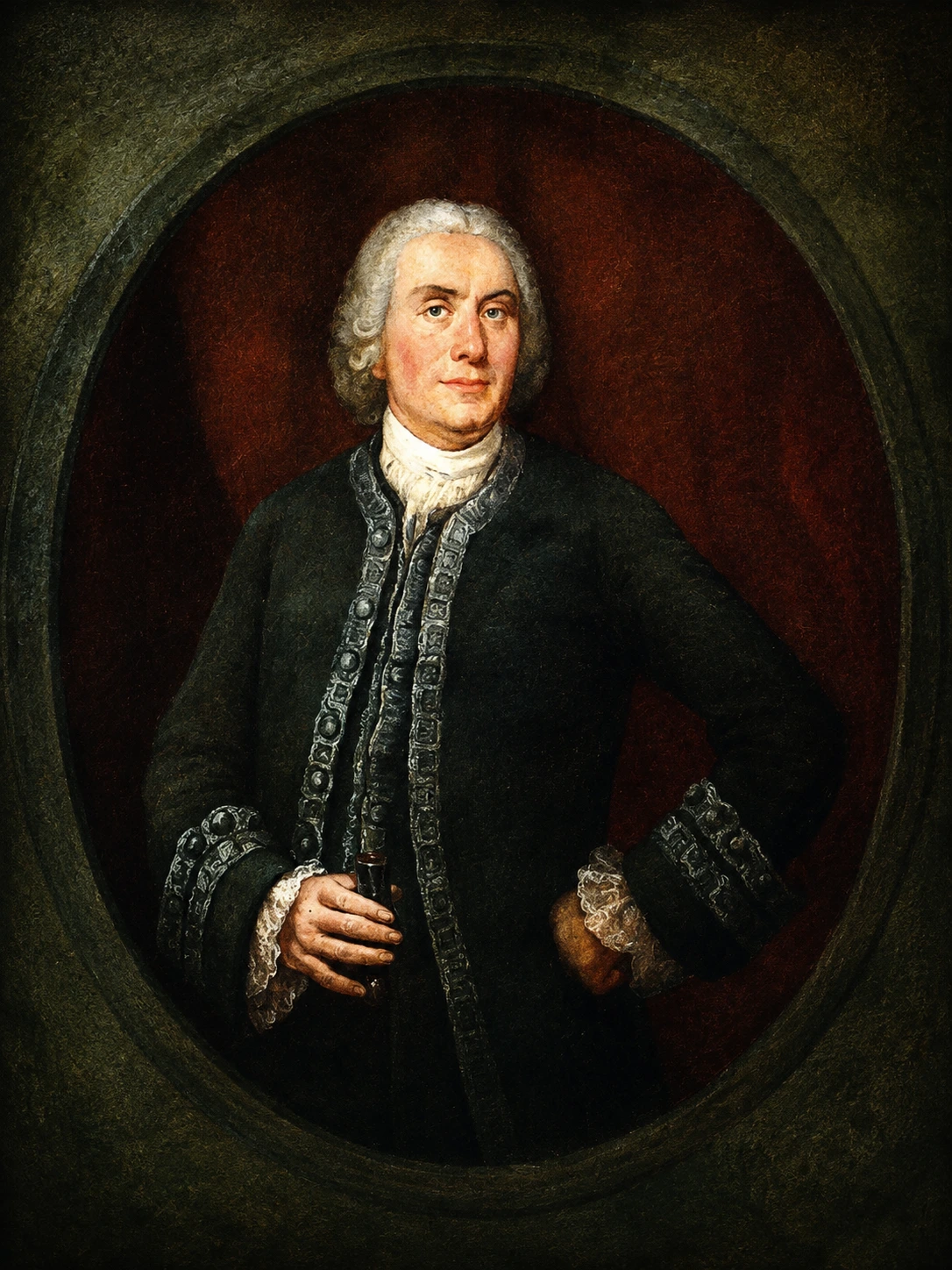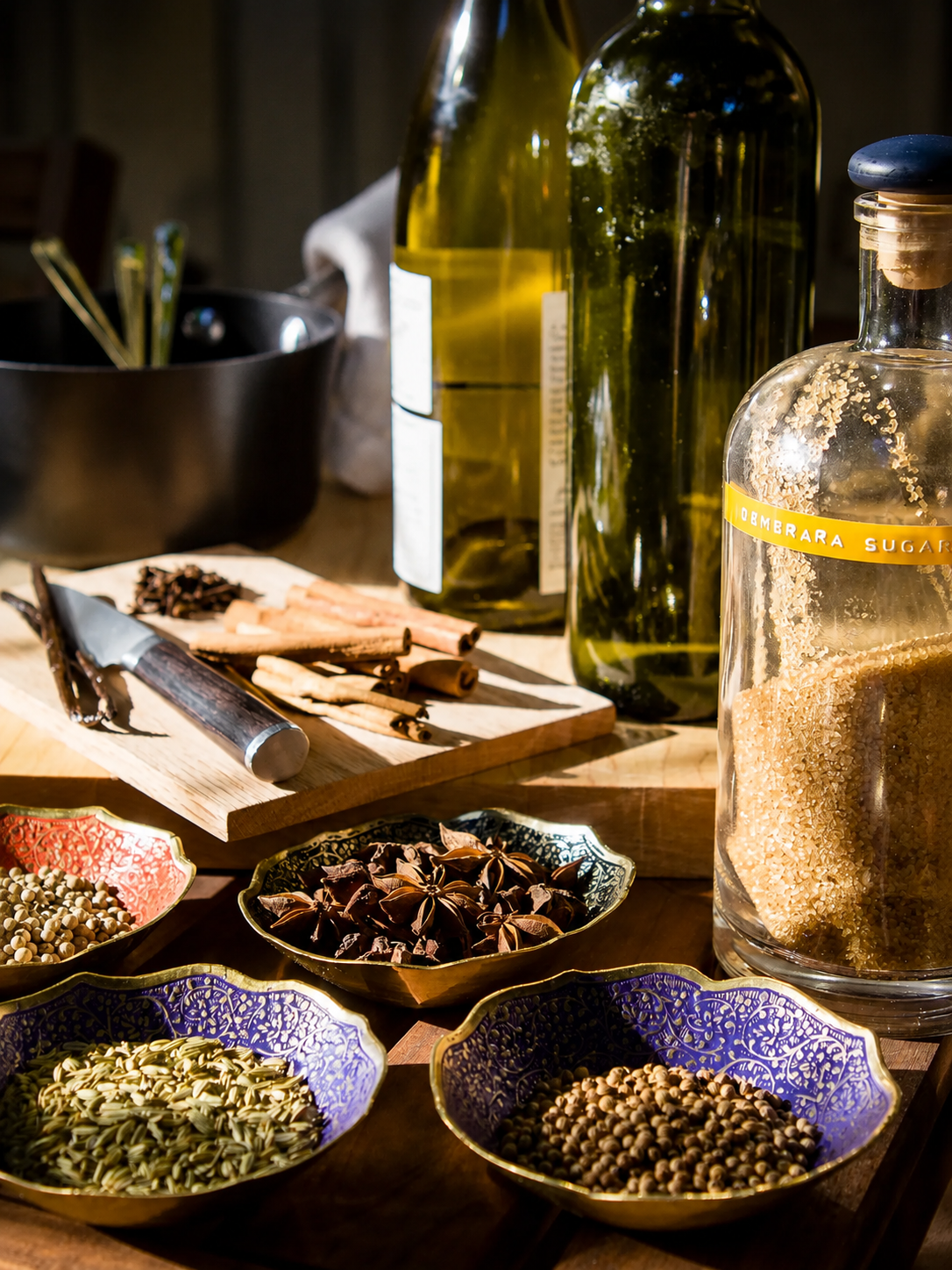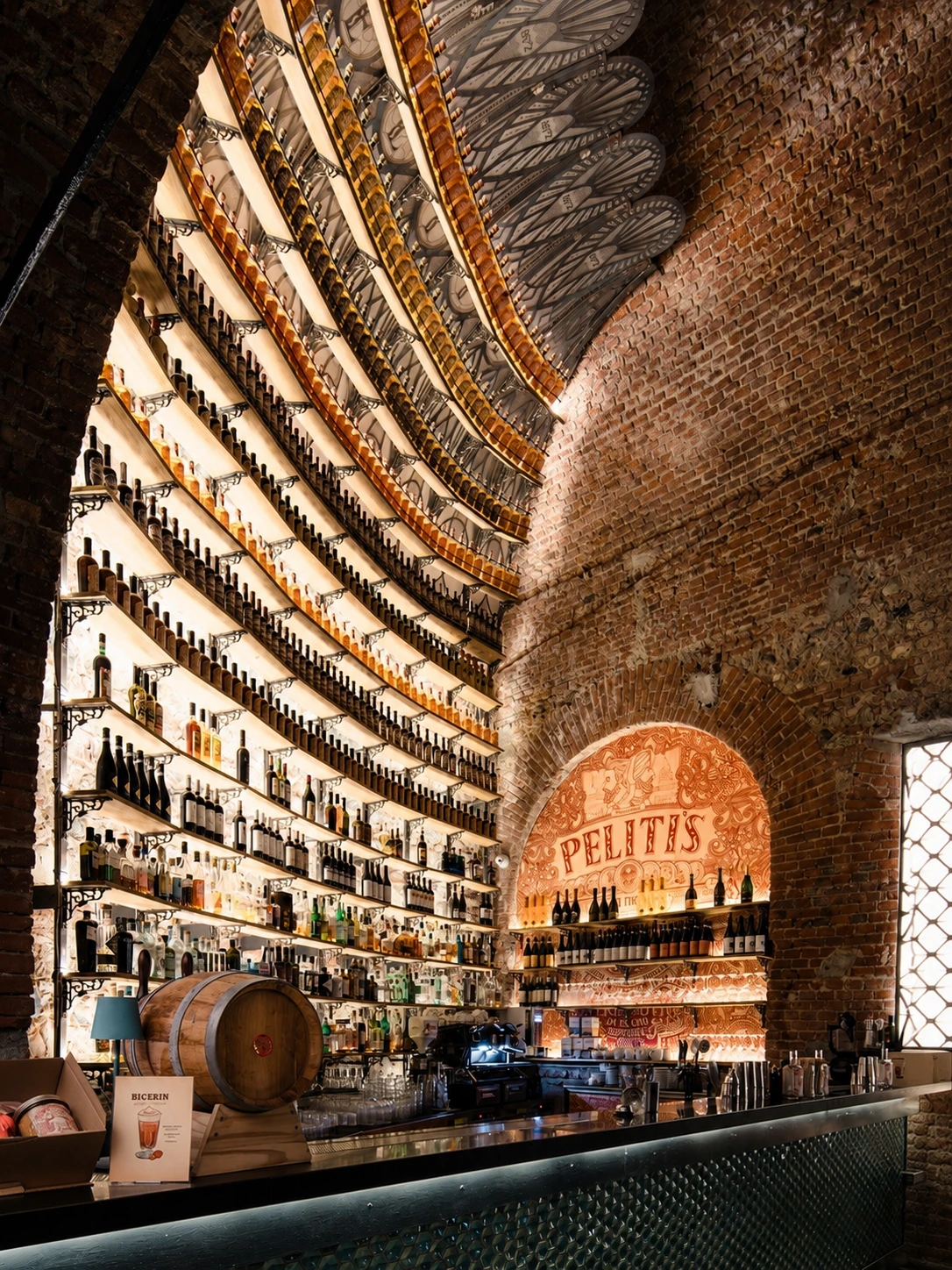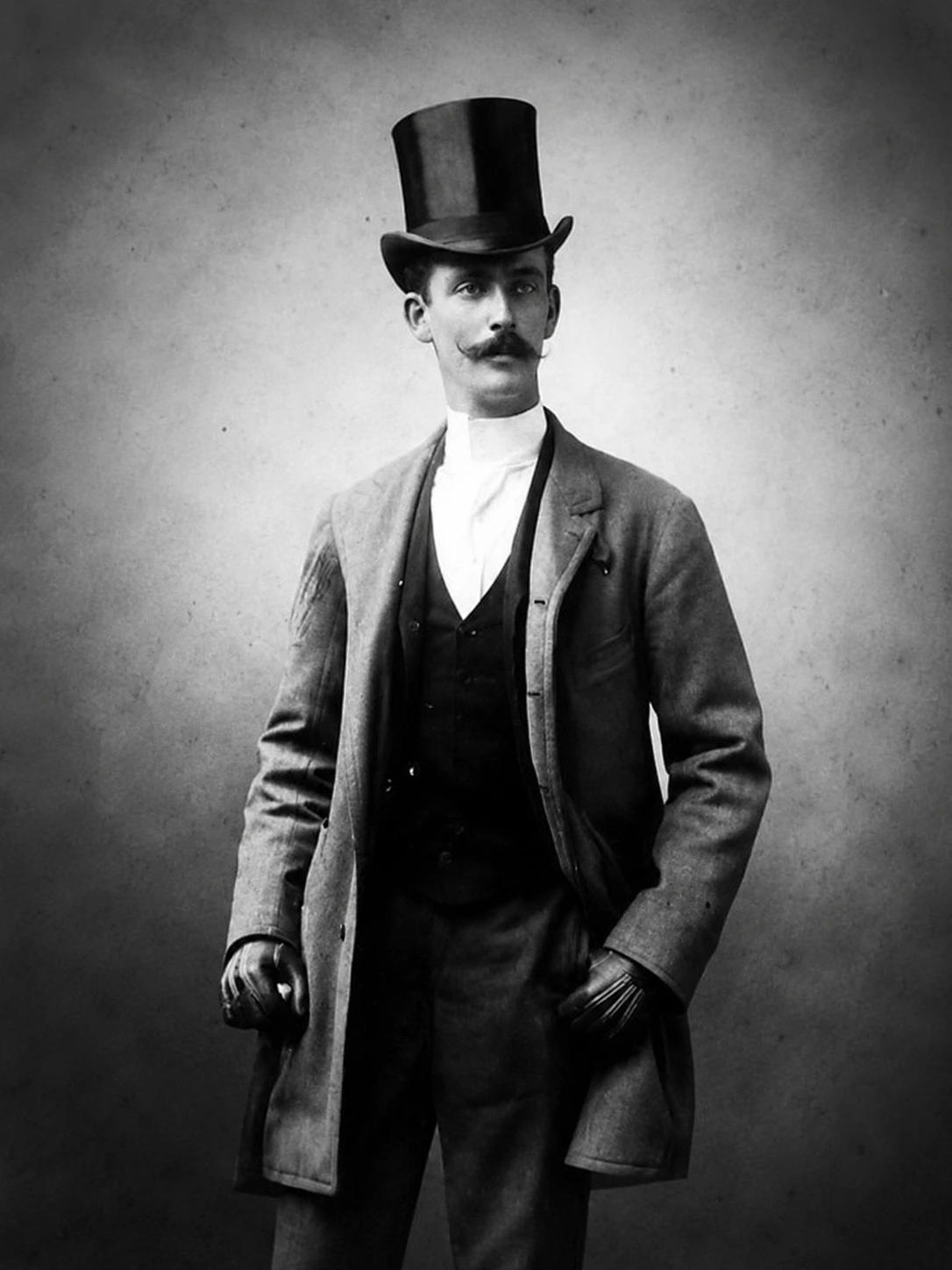
There is a gesture before there is a cocktail. One unspecified evening between 1919 and 1920, at the counter of Caffè Casoni on Via de' Tornabuoni in Florence, an immaculately dressed gentleman leans towards the bartender and murmurs a request. Nothing solemn, nothing theatrical: he simply asks that his usual Americano be made stronger. Out with the soda, in with the gin. The bartender complies. The gentleman tastes, approves, and asks for one last thing — that the customary lemon twist be replaced with a slice of orange. That gentleman is Count Camillo Negroni, and he has just invented, without knowing it, one of the most famous cocktails in history.
The surprising part is not the drink. It is the man. Because behind a three-ingredient cocktail that anyone can recite from memory — gin, bitter, vermouth — lies a life worthy of an adventure novel: a noble childhood in the hills of Fiesole, a flight across the ocean, years as a cattleman on the plains of Wyoming, a fencing school in Manhattan, poker tables and racecourses, and finally the return to a Florence that had, for a fleeting moment, been the capital of Italy. This is the story of that man, patiently reconstructed by a Florentine bartender who spent years in the archives separating myth from documents.
The investigator of the Count
For decades Count Negroni was little more than a barroom legend: some said he was born in Rome, some in Milan, some in Patagonia, some in Africa. It was Luca Picchi who set the record straight — a Tuscan bartender for years stationed at Caffè Rivoire in Piazza della Signoria, who at a certain point decided to stop telling the story and go and verify it. Libraries, parish registers, notarial deeds, cemeteries. Out of it came two books — Sulle tracce del conte (2002) and Negroni cocktail, una leggenda italiana (Giunti, 2015) — which remain the most serious reference on the subject.
Picchi's conclusion is unequivocal: Count Camillo Negroni really existed, and it was he — not the bartender — who authored the request. The bartender, one Fosco Scarselli, simply executed it with the skill of his craft. "The drink was invented by Negroni," Picchi summed up; "Scarselli did nothing but make it."
He was lively, creative, rebellious, a great fencer, a polyglot, a traveller: a character who got himself noticed. Luca Picchi on Camillo Negroni
A nobleman from Fiesole
Camillo Luigi Manfredo Maria Negroni was born in Fiesole on 25 May 1868, at the villa La Torraccia, into one of those Anglo-Italian families that populated late-nineteenth-century Tuscany. His father was Count Enrico Negroni; his mother, Ada Savage Landor, descended from the English poet Walter Savage Landor, who still rests today in Florence's romantic English Cemetery. Camillo grew up bilingual from birth, and as an adult spoke Spanish and French with ease too — a wealth that would prove decisive.
Orphaned of his father very early, at sixteen he was enrolled at the Military Academy of Modena. In the meantime his mother had remarried a French marquis and moved to a villa near Scandicci; when the young Camillo returned, the atmosphere at home was no longer the same. Between family tensions and — so the story goes — a thwarted love for a noblewoman from Modena, the count made the most radical choice possible for a young man of his time: he bought a ticket to America.
The cowboy and the fencing master
His first destination was Wyoming. There, the heir to a Fiesole villa took up work as a cowboy: he laboured on Walter Cunningham's ranch, and before long became his right-hand man. It is an image worth letting settle — the future godfather of a drawing-room cocktail branding cattle and sleeping beneath the stars of the Great Plains.
Around 1899 he moved to New York and opened a fencing school on Madison Avenue. These were crucial years, and not only for him: they were the years of the American Golden Age of cocktails, when the art of mixing was already widespread and the cocktail was a status symbol in the clubs of Manhattan. Camillo frequented the most important venues, played poker, bet at the racecourses, lived — in no uncertain terms — the high life. He is said to have managed up to forty drinks in an evening without ever losing his composure. It was here, between a Manhattan and a Martinez, that he acquired the taste for strong, built drinks that he would later bring home.
He returned to Italy in 1904, with an American wife. For a few years he lived at Bolgheri, a guest of the Marchesi della Gherardesca, following their racing stable. Then, around 1912, he returned to Florence — and went back to frequenting the city's salons and cafés. Among them, naturally, the Casoni.
The count's life
A life in motion
From the hills of Fiesole to the plains of Wyoming, from Manhattan to the counter of the Casoni. Tap a stage to learn more.
Scroll the timeline and tap a stage →
The vermouth hour
To understand the evening at the Casoni, you have to understand the habit that made it possible. Towards the end of the nineteenth century, in Florence too six o'clock in the afternoon had become the vermouth hour — a custom imported from Turin during the years when Florence was, briefly, the capital of the young Kingdom of Italy. Vermouth was nothing new: Antonio Carpano had codified it in Turin in 1786, and ever since, Vermouth di Torino had become a status symbol, served chilled, neat, in small stemmed glasses the Florentines called campanelle, often with a spritz of seltzer.
From that habit came the first true Italian mixed drink: the Americano — originally called Milano-Torino, or Mi-To, after the origins of its two ingredients: the Campari bitter of Milan and the red vermouth of Turin. Lengthened with a little soda, it had become the favourite drink of the American tourists who were after something less robust to acclimatise their palates — hence, most likely, the name. Light, refreshing, elegant. Too light, though, for a man who had learned to drink in Manhattan.
The evening the Negroni was born
And so to the gesture. The Casoni was no ordinary café: it was a luxury grocery on a most elegant crossroads of Via de' Tornabuoni, equipped to serve champagne, wines from all over the world, vermouth, liqueurs, coffee and select teas — and perfumes and tobacco besides. The count went there always impeccable, in the latest fashion. Accustomed to the cocktails of New York, he found the Americano pleasant but feeble. So, between 1918 and 1920, he murmured to Scarselli the request that would make history: take out the soda and put gin in its place, the most sought-after spirit of the age.
The original recipe, as reconstructed by Picchi, was not yet the geometric one we know: it was a corrected Americano, a base of vermouth with a splash of Campari, just enough gin to give it strength, and a drop of seltzer to bind the aromas in the little campanella glass. Then the touch of class: the slice of orange in place of the lemon, a fruit hard to find out of season at the time, and therefore a small luxury. The drink caught on, and the Florentines began to order it by name: "make me the Americano in Count Negroni's fashion." Then, simply: "a Negroni."
The recipe
Three parts, one balance
Old fashioned, ice, orange slice.
IBA method. Pour the ingredients directly into the glass filled with ice, stir gently and garnish with half a slice of orange. The 1:1:1 proportions were codified in the 1960s — but the real secret, then as now, is the balance.
A single constant
For almost half a century the Negroni had no fixed formula. It was only around the 1960s that it was decided to standardise it in equal parts: one third gin, one third bitter, one third vermouth. This is the version recognised today by the International Bartenders Association and the one most bars serve around the world. But many contemporary bartenders — Picchi included — consider the 1:1:1 more a starting point than a dogma: with a modern, hyper-aromatic gin, an over-complex vermouth steps on the rest, and vice versa. The one rule that doesn't move is the Campari. Everything else is conversation.
The other story: the general of Senegal
Every self-respecting myth has its alternative version, and the Negroni's is a particularly tasty one. The descendants of another Negroni family — that of the Corsican-born French general Pascal Olivier de Negroni de Cardi, born in 1829 — claim that it was he, and not the Florentine count, who invented a vermouth-based cocktail, in 1857, while stationed at Saint-Louis, in Senegal, on the occasion of his own wedding. In support they produce a letter from 1886 in which the general mentions "the vermouth-based cocktail I invented at Saint-Louis," and which was a great hit at the Lunéville officers' club.
The story is fascinating, but it stumbles over a decisive chronological detail: Campari bitter was only created in 1860. Whatever drink the general may have invented for his 1857 wedding, then, could not have contained Campari — and therefore could not have been the Negroni we know. It could have been, at most, a distant cousin: one of the many vermouth-and-bitter mixes that circulated in mid-nineteenth-century Europe. This is why almost every cocktail historian — and, it must be said, the marketing department of those who make Campari — attributes the cocktail to the count of Fiesole.
The Negroni effect
Like so many Italian products, the Negroni triumphed abroad before it did at home — so much so that there is an expression, the Negroni effect, to denote exactly this: a success recognised abroad and only afterwards celebrated in Italy. One of the first illustrious witnesses was Orson Welles: in 1947, in Rome to film Black Magic, he tasted it and wrote about it to an American columnist with a line that became proverbial — the bitter is good for your liver, the gin is bad for you, and the two balance each other out. Later the Negroni would become the drink James Bond ordered when he didn't feel like a Martini.
In Italy the explosion came with the dolce vita, when the cocktail tied itself tightly to cinema, fashion and design, entering by right into the imagery of Italian style. From there it never stopped: today the Negroni rivals the Old Fashioned for the title of the world's best-selling cocktail, has a week all of its own — Negroni Week, every June — and has generated a progeny of variations so vast it now constitutes a family in its own right.
One cocktail, a thousand descendants
The Negroni family
Tap a variation for the recipe and its story.
What remains of the Casoni
The geography of the gesture, sadly, is almost all lost. Caffè Casoni later became Caffè Giacosa; in 2001 it was taken over by Roberto Cavalli, who kept it running until its closure in 2017. Today, where the Negroni was first poured, there stands a fashion boutique. It is no longer possible to order a Negroni on the exact spot where it was born — though a Caffè Giacosa has reopened nearby, on the other side of Via della Spada, to keep alive at least the echo of the name.
What truly counts, however, remains — and it is inside the glass. When in Turin we pour a Negroni — here at Casa Vermouth, on the third floor of the Galleria Subalpina — that third of red vermouth carries with it a direct line that runs back to Carpano and to 1786. The Florentine count did not invent vermouth: he took it, strengthened it, and gave it a name. That is the beauty of the great classics. You don't own them. You pass them on.
A century on, the count's gesture has become a universal language. Three ingredients, equal parts, a slice of orange and no straw. Sweet and bitter at once, red like an evening in no hurry to end. Camillo Negroni — cowboy and fencer, gentleman and great drinker — did not invent a cocktail. He invented a balance. And then, like a true count, he lent it his name and let it go out into the world.