From our doorstep

Explore Turin,
one street at a time.

Six plates, fifty-five addresses, and not one of them chosen at random: this is the city as it looks from our door, after years of walking it. Pick a layer, follow the numbers, and let Turin do the rest — it saves its best for whoever looks twice.

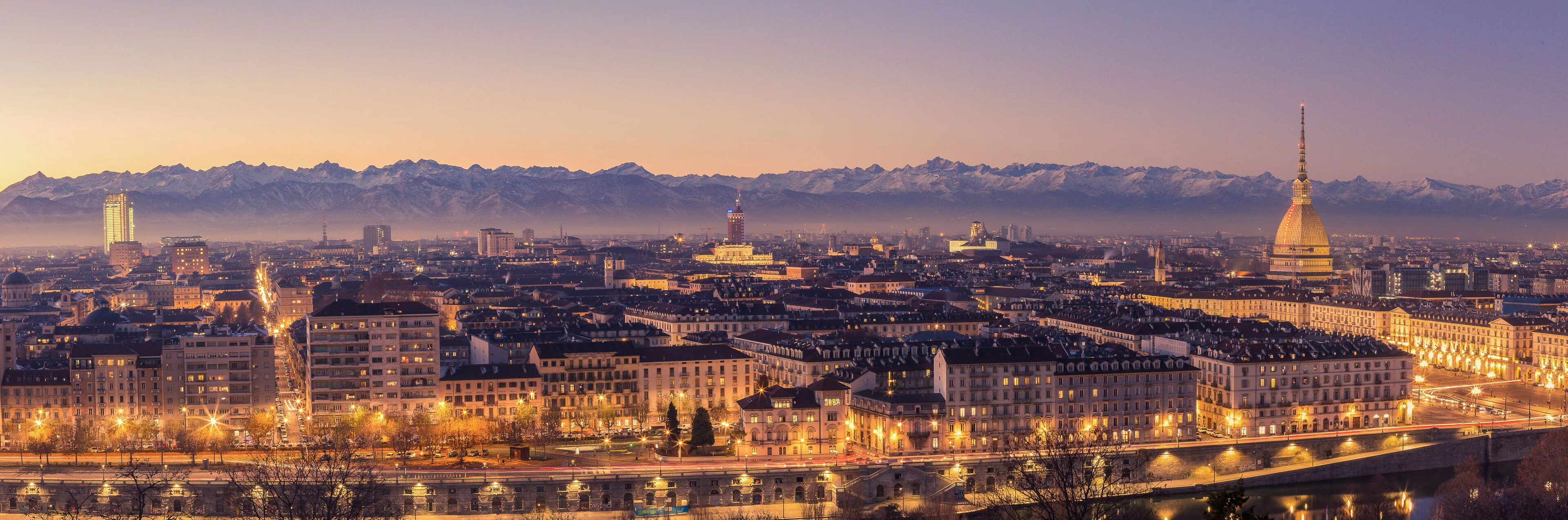
The rooftops of Turin with the Mole Antonelliana rising against the Alps
The Concierge’s Atlas

Six maps. The doors we knock on.

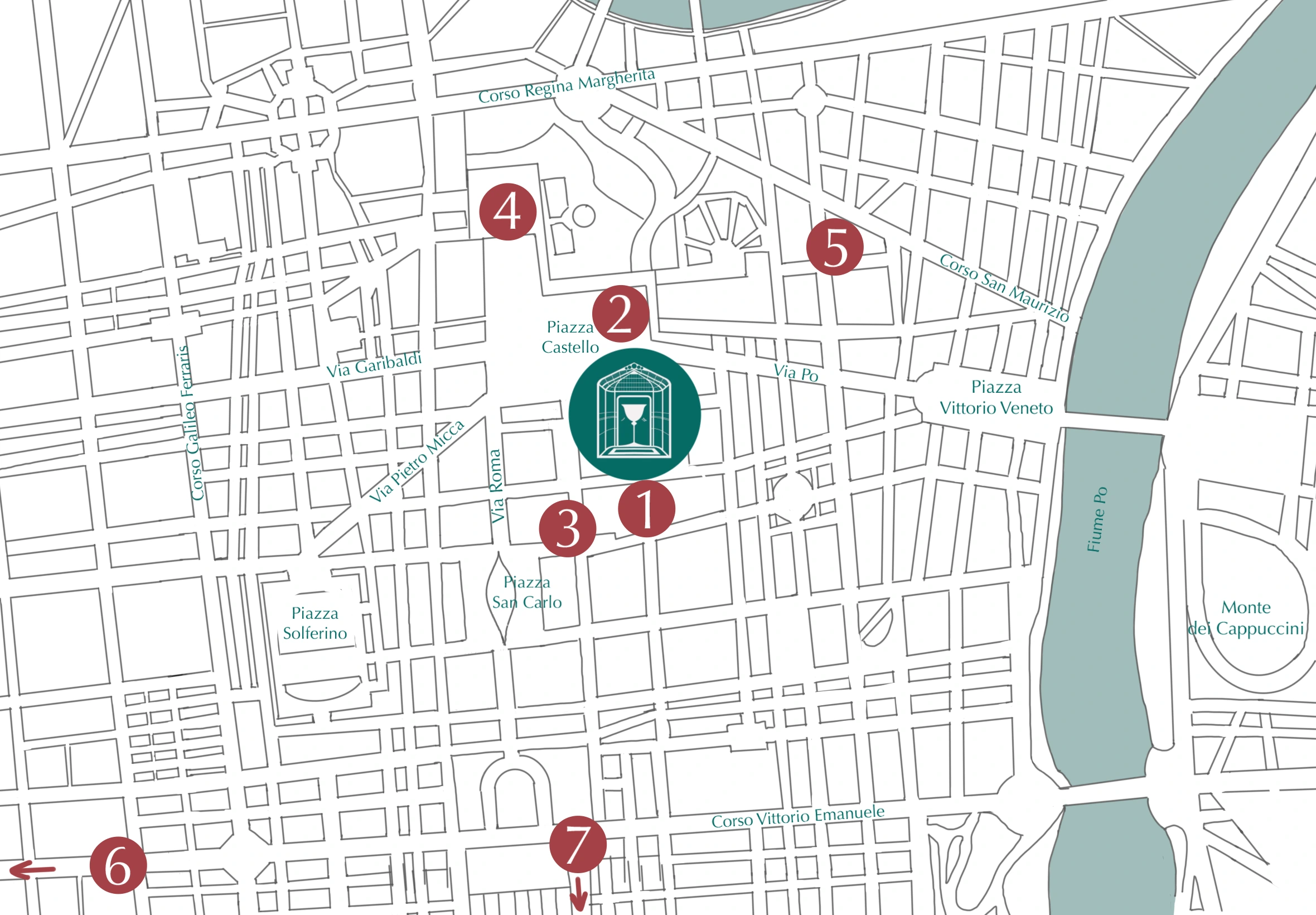
Not everything — only what we would walk a friend to. Each number on the map has its card below; the green seal is home.

Illustrated map of central Turin — museums layer
Tavola I The Museums
Casa Vermouth — you are here Hover to name it, tap to open it
Our seven museums Seven addresses
The perfect day

The perfect day does not exist:
it’s all a matter of perspectives.

What we can do is offer you ours. Take the perfect forty-eight hours as they look from where we stand — one day with Ciro, one with Giulia.

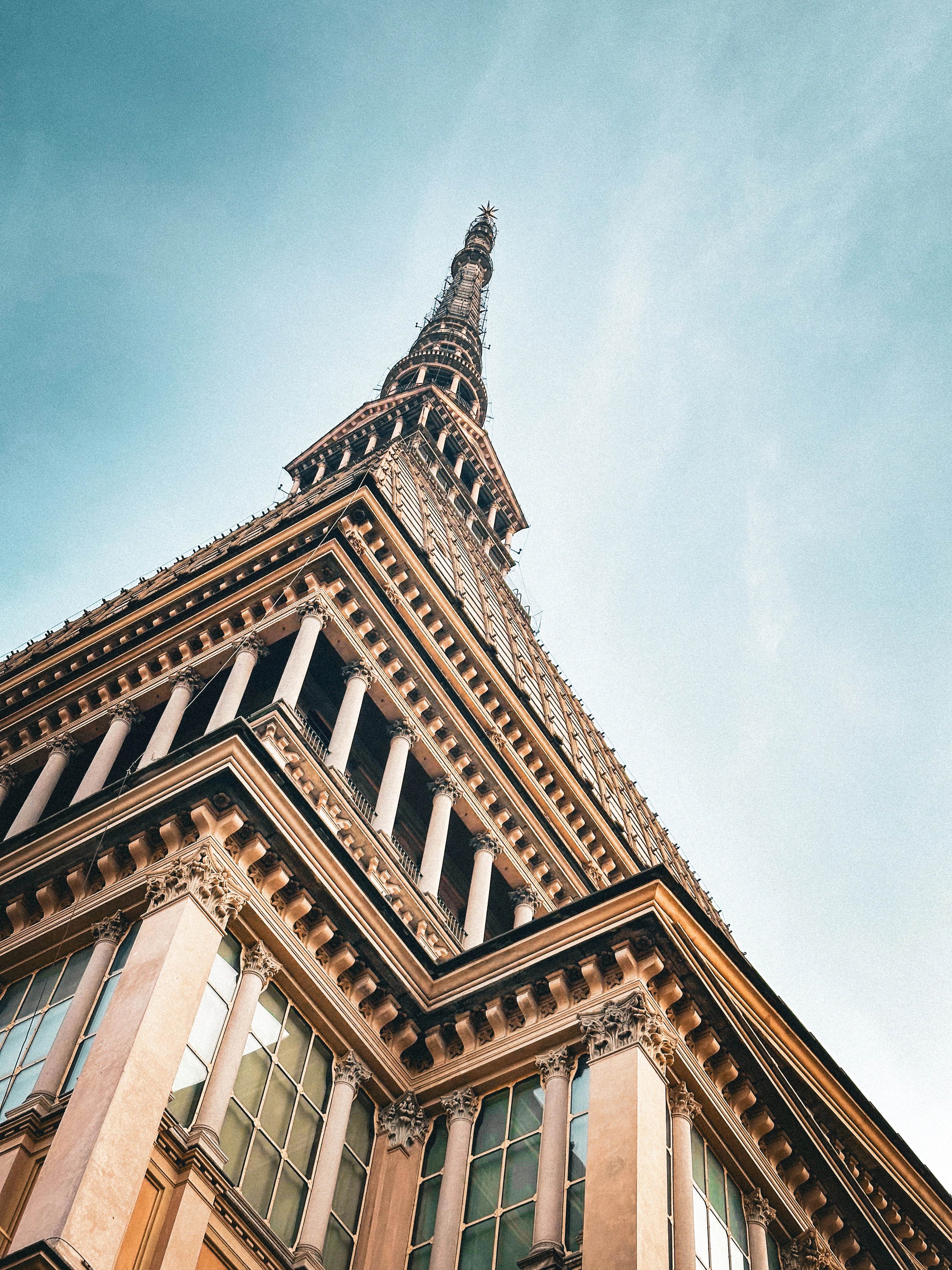
The Mole Antonelliana rising above the rooftops of Turin

Day 1

The squares at first light, the Egyptians, and an evening on the water.
  1. Morning6.45 – 12.30

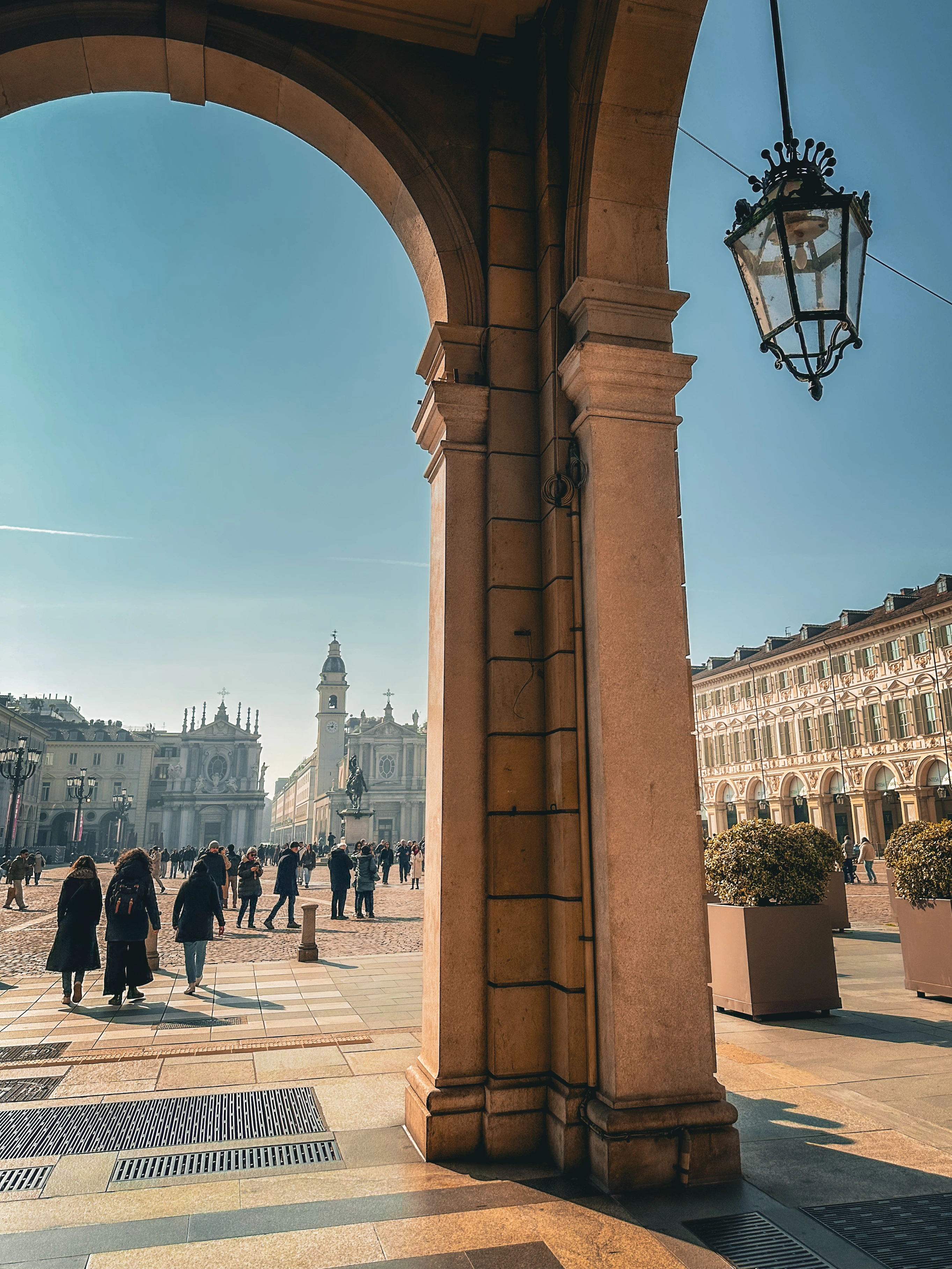
    Set an alarm you will not regret. The finest squares in Turin belong to whoever arrives first: Piazza Carlo Alberto behind Palazzo Carignano, then Piazza Carignano itself, then the long arcades of Piazza San Carlo with the light still low and the caffès just opening. Breakfast at Caffè Torino under the colonnade, or at the Farmacia del Cambio if you take Piazza Carignano on the way. Then the Museo Egizio — book the first entry online — and give it three unhurried hours: founded in 1824, second only to Cairo, and never once dusty.

  2. Lunch12.45 – 14.15

    Six minutes from our door, La Piola Sabauda on Via Giolitti. A piola is the Piedmontese osteria — eat well, drink better, pay little — and this is your introduction to the regional table under bare brick vaults: carne cruda, vitello tonnato, tajarin, a glass of Nebbiolo, bonet at the end. Book in the morning; the room fills.

  3. Afternoon14.30 – 18.00

    Via Lagrange first, for the shops and the shop windows. Then turn into Via Giolitti and let the pace drop: the Giardini Cavour, and Piazza Maria Teresa under its plane trees, which is the quietest square in the centre and stays that way because nobody puts it on a list. Carry on east until the porticoes run out and the Po is in front of you.

  4. Aperitivo18.00 – 20.00

    A rosso, neat, at Peliti’s — an old boathouse under the Murazzi, vermouth on tap, from a recipe made in 1877 for the future Edward VII. Then cross Ponte Umberto I and climb to Monte dei Cappuccini for the last half hour of light: the whole city below, the Mole in the middle of it, the Alps behind. Work backwards from sunset and you will get the hour right.

  5. Dinner20.30 – late

    Come down over Ponte Vittorio Emanuele I into Piazza Vittorio, the largest arcaded square in Europe, at its best once the lamps are lit. Dinner at Signorvino, under the arcades at number 1, with fifteen hundred Italian labels sold at cellar prices. A second glass at Caffè Elena, open since 1889 and still carrying the painted Carpano sign, or at La Drogheria across the square. Home along Via Po, dry whatever the weather.

Day 2

Royal Turin, the Roman quarter, and dinner on a rooftop racetrack.
  1. Morning8.30 – 12.30

    Thirty seconds from the door, look up at Via Carlo Alberto 6: Nietzsche took a room here in 1888 and wrote Ecce Homo above the entrance to our galleria. Drop into the Galleria Subalpina and the Libreria Luxemburg, then breakfast in a room fit for a court at Baratti & Milano — here since 1875, gilded mouldings, Belle Époque mirrors. Then Piazza Castello and the Musei Reali: the state rooms, the Armeria Reale, and Guarini’s Cappella della Sindone, back in the visit since 2018.

  2. Lunch12.45 – 14.15

    On the way out, push open the plain door of San Lorenzo in Piazza Castello: no façade, and then a dome of interlacing ribs opening into an eight-pointed star — Guarini again — with Vittone’s twelve-step Scala Santa. Then into Roman Turin along Via Palazzo di Città to its square, and a quick lunch at the Focacceria Sant’Agostino: focaccia in the style of Recco, farinata from a beechwood oven, a few euros.

  3. Afternoon14.30 – 18.00

    Via Garibaldi for the shopping, then abandon the plan: Via Barbaroux, Via Stampatori, the small green of the Giardino La Marmora, and out into Piazza Solferino. Come home along Via Pietro Micca, the only diagonal in a city built entirely on right angles, cut through the medieval quarter at the end of the nineteenth century and lined with the best belle-époque fronts in Turin.

  4. Aperitivo18.30 – 20.00

    For the modern city, take the metro from Porta Nuova to Lingotto: Fiat’s first great factory, with its test track still on the roof. It is now the Pista 500, the largest hanging garden in Europe, and since June 2026 House of Carpano pours on the track itself — twenty-eight metres up, in the city where the first glass of vermouth was served in 1786. Ask for a Reverse Manhattan.

  5. Dinner20.30 – late

    Stay where you are. La Pista serves dinner in the middle of the old track, with the Alps on one side and Renzo Piano’s glass Scrigno on the other, a contemporary kitchen and three hundred and fifty labels behind it. Book ahead, and check the last metro before the second glass — otherwise a taxi has you home under the arcades in fifteen minutes.
Day 1

Madama, the market, the river — and San Salvario after dark.
  1. Morning9.00 – 12.30

    Start on the same square Ciro starts on, but through the other door. Palazzo Madama is two thousand years of Turin stacked in one building — a Roman gate, then the castle of the princes of Acaja, then Juvarra’s baroque façade of 1716 draped over the front like a mask — and the tower gives you the city from above. Next door, the Biblioteca Reale: Palagi’s frescoed reading room, and in the vault beneath it Leonardo’s self-portrait, which comes out only for short exhibitions, so check before you set your heart on it. Finish at the Duomo and step outside to the Porte Palatine, where the Roman city begins.

  2. Lunch12.30 – 14.00

    Ten minutes north and the register changes completely: Porta Palazzo, the largest open-air market in Europe — fifty-one thousand square metres, a thousand traders, a hundred thousand people a week, and the Liberty ironwork of the 1916 clock canopy over the food halls. Weekday stalls come down at two and Sunday there is nothing, so go before one. Eat opposite, in the Mercato Centrale inside Fuksas’s glass building: twenty-eight counters, Piedmont and half of Italy, and no need to choose only one.

  3. Afternoon14.15 – 17.30

    Back along Via Po under the arcades, at the pace the street was built for: antiquarian booksellers, and at number 12/a the Niche Parfums shopfront, a fully surviving 1920s interior. Step into the courtyard of the old university at number 17, then on to the Mole Antonelliana and the Museo Nazionale del Cinema, which spirals up around the void. Take the glass lift: fifty-nine seconds through the middle of the dome to the terrace at eighty-five metres.

  4. Aperitivo18.00 – 20.00

    Down through the Valentino to the Imbarchino: a city boathouse left derelict in 2016, reopened in 2019 by three associations after a crowdfunding campaign, and now a terrace on the current of the Po under the wisteria, with a community radio station in the back. Good beer, simple food, no pretension. Ciro takes the Murazzi bank; this is the green one, and it puts you ten minutes from dinner.

  5. Dinner20.30 – late

    San Salvario, the neighbourhood that changed Turin’s mind about itself. Scannabue, on Largo Saluzzo since 2008, is the institution: vitello tonnato, agnolotti del plin, guancia brasata al Barbera, and a room that is serious about food and not at all solemn — book. Afterwards, five doors away at Via Saluzzo 42/B, La Choza pours South American cocktails until three in the morning, and four at weekends. Nobody in this quarter is in a hurry to go home.

Day 2

The hill in the morning, the factory after lunch, a curtain at eight.
  1. Morning9.30 – 13.00

    Take the tram out to Sassi and climb to Superga on the rack tramway: a line opened in 1884, rebuilt in 1934, the only one of its kind in Italy, with two trailer carriages from 1884 still in service. Three kilometres, four hundred and twenty-five metres of climb, eighteen minutes, gradients of twenty-one per cent. At the top, Juvarra’s basilica of 1731, the Savoy tombs beneath it, the whole Alpine arc in front of you, and at the back the memorial where the Grande Torino came down in 1949. Trams run hourly; on Wednesdays the line rests and bus 79/ does the climb instead.

  2. Lunch13.30 – 14.30

    Back in the centre, three minutes from our door: PlinTO in Via Maria Vittoria, an agnolotteria and nothing else. The plin is the small pinched raviolo of the Langhe, and here it comes in every version there is — the traditional roast filling, vegetarian, frankly heretical, and a sweet one to finish. Half portions, so order three kinds. Quick, cheap and very good, which is exactly what a day split between a hill and a factory needs.

  3. Afternoon15.00 – 18.00

    Metro to Lingotto, Fiat’s first great factory. The first Eataly in the world opened here in 2007 inside the old Carpano vermouth works, and upstairs, free, the Museo Carpano runs from 1786 to now and ends with six jars you open with your nose. Then Renzo Piano’s Scrigno and the Pinacoteca Agnelli — Canaletto, Manet, Balla, seven Matisses — and out onto the Pista 500, the old rooftop test track, now a garden. Ciro comes here after dark; the Alps are worth the daylight.

  4. Aperitivo18.30 – 19.30

    Back in the centre, one glass before the curtain, and let the theatre choose the bar. If it is the Regio, stand at Mulassano in Piazza Castello, all marble and tooled leather, where the tramezzino was invented in 1925 — the opera house is thirty seconds away. If it is the Carignano, take Bar Cavour at Del Cambio, upstairs from the restaurant and directly opposite the theatre door.

  5. Dinner20.00 – late

    The curtain. The Regio is Juvarra’s 1740 façade with Carlo Mollino’s astonishing 1973 interior behind it, rebuilt after the fire of 1936; the Carignano, two minutes from our door, is the eighteenth-century horseshoe in red and gold where Turin has been going to the theatre for two hundred and seventy years. Book the seats before the trip — and tell us, so we can book you a table for after: Turin dines late on theatre nights, and the last glass is on our own shelf, downstairs, whenever you come in.

Your Turin

Take the maps.
Then take your time.

Turin rewards a slow eye: a courtyard left ajar, the light under the arcades at six. Build your own two days out of ours — and keep an eye on what is on while you are here, because a festival or an opening night can turn a weekend upside down and make it. Every good exploration needs a little improvisation.

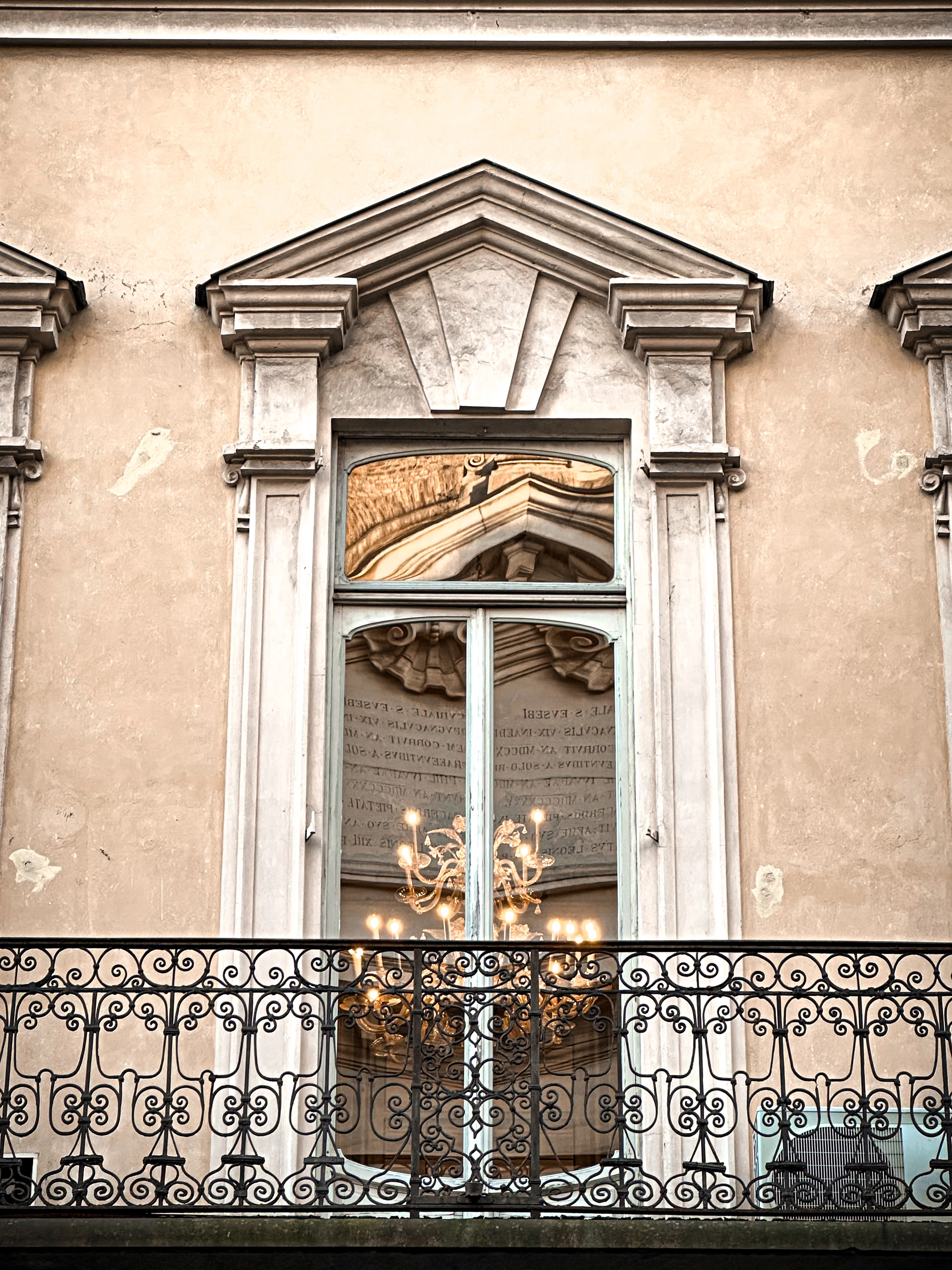
Light falling through a palace window in Turin
Beyond the atlas

The best map is a conversation.

Tables that need booking, exhibitions that just opened, the aperitivo hour done properly — ask us. We live here, and it shows.