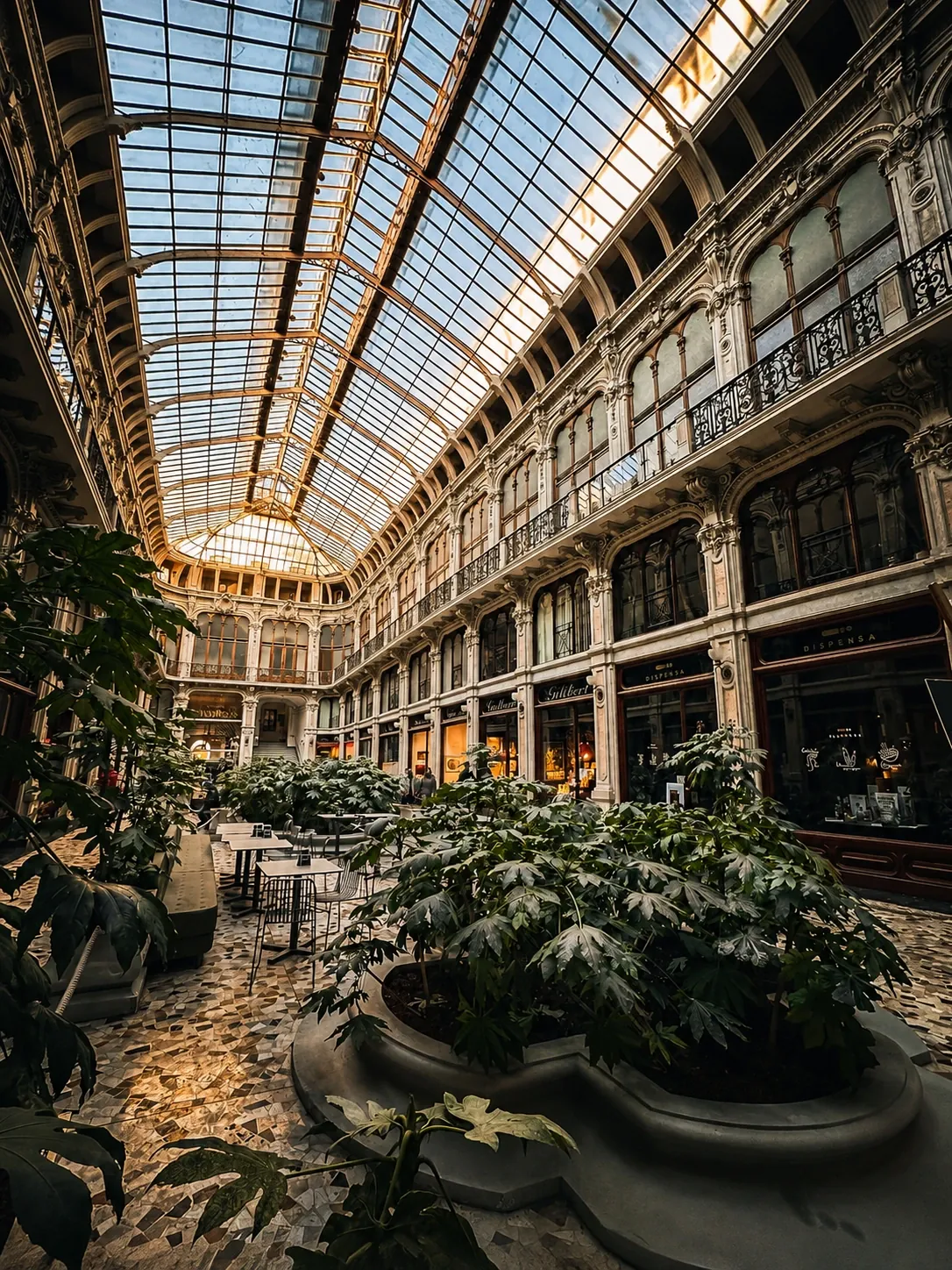
From the proclamation of the Kingdom on 17 March 1861 to the day the King arrived in Florence, 3 February 1865, Turin was the capital of Italy for one thousand four hundred and nineteen days. Then a treaty with France took the title away, and the city did something unusual for a place that has just been demoted: it kept the furniture. The royal palaces stayed. So did the parliament chamber, the arcades — eighteen kilometres of them — the cafés where the country was argued into existence, and the habit of a glass of vermouth at six. What it lost was the crowd. That is still, a century and a half later, the best reason to come.
Two or three days is the right amount of time for a first visit, provided you spend them well, and most plans fail on a single detail: the calendar. The great museums here do not close on the same day. The Musei Reali shut on Wednesdays, the Mole on Tuesdays, the Museo del Risorgimento on Mondays, and the rack tramway up to Superga rests midweek. An itinerary that ignores this works beautifully for three days out of seven.
So this one is built the other way round. It is the plan we give our own guests — Casa Vermouth sits inside the Galleria Subalpina, a minute from Piazza Castello — distilled from the two forty-eight-hour programmes that Ciro and Giulia wrote for our Explore Turin page, checked against each museum's day of rest, and wired to a calendar. Tell it the day you arrive, and it rearranges itself.
The short answer
Two days in Turin, in brief
- Day 1
- The capital. The Museo Egizio at nine, lunch under brick vaults, the Royal Palace and the Armeria Reale, vermouth standing at a nineteenth-century counter, dinner where Cavour dined.
- Day 2
- The river, the hill, the Lingotto. The glass lift through the dome of the Mole, agnolotti for lunch, the Pinacoteca Agnelli and the rooftop test track at Lingotto, an aperitivo twenty-eight metres up.
- Watch the days
- Musei Reali closed Wednesdays · Mole and Palazzo Madama Tuesdays · Risorgimento and Pinacoteca Agnelli Mondays · Museo Egizio shorter hours on Mondays.
- Book ahead
- A timed entry for the Museo Egizio, the Mole's panoramic lift, and dinner at Del Cambio or La Pista.
- The pass
- The 48-hour Torino+Piemonte Card covers most of the museums below.
- Where to sleep
- At Casa Vermouth, in the Galleria Subalpina complex on Via Cesare Battisti. A few minutes' walk from the Museo Egizio and Piazza Castello, right in the heart of the historic centre.
Why Turin is the first capital of Italy
Turin was a capital long before there was an Italy to be capital of. Duke Emanuele Filiberto moved the Savoy court here from Chambéry in 1563 and the city was laid out to look the part: a grid of straight streets, royal squares, porticoes so that a courtier could cross town without getting wet. When the Savoys became kings of Sardinia, Turin was their seat; when that kingdom set about uniting the peninsula in the 1850s, Turin was where the plotting was done — by Cavour, mostly, at a corner table of a restaurant that is still open.
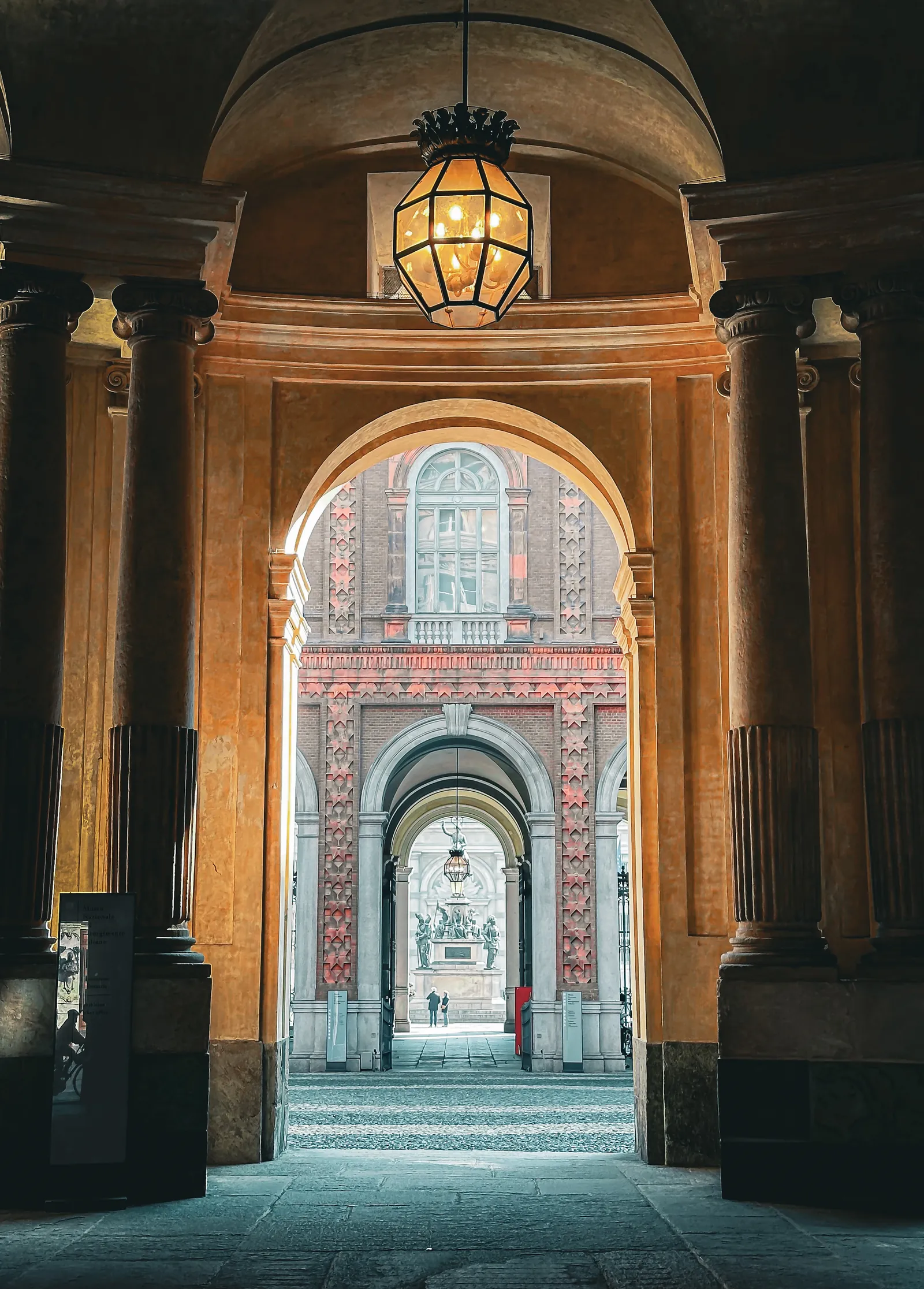
The first parliament of united Italy met on 18 February 1861. Not, as almost everyone assumes, in the beautiful elliptical chamber on the first floor of Palazzo Carignano — that room had housed the Subalpine Parliament since 1848, and it was far too small for 443 deputies from the whole of Italy. In October 1860 Cavour ordered a new hall built in the palace courtyard within three months. The engineer Peyron delivered it: a temporary structure of wood, iron and glass, with seats in blue velvet. The Kingdom of Italy was proclaimed there on 17 March, and the hall was pulled down once the capital had gone. Its drawings were sent to Rome, where they served as the model for the temporary chamber of Montecitorio. The courtyard on our cover is the empty space where Italy began.
Then, in September 1864, the government signed a convention with Napoleon III. France would withdraw its troops from Rome; Italy, as a pledge that it had given up on Rome, would move its capital somewhere else within six months. When the news reached Turin the city rioted, and on 21 and 22 September troops fired on the crowds in Piazza Castello and Piazza San Carlo, leaving more than fifty dead. A plaque in Piazza San Carlo remembers them. Florence became capital in February 1865; Rome in 1871.
What a city does after it stops being a capital is the more interesting story, and you will walk through it for two days. Turin built itself a glass-roofed arcade in 1874, finished a synagogue as a 167-metre tower in 1889, founded Fiat in 1899, became the first capital of Italian cinema, and went on pouring the vermouth it had invented in 1786. Every stop in the plan below belongs to one of those chapters.
Three hundred and thirty-six years
From Savoy capital to the first capital of Italy — and after
Nine dates that explain the city you are about to walk through. Tap one to read it.
Nine dates · tap to explore
A Turin made to measure
A word on how the plan below is built. Each part of each day offers two or three ways of spending it, and you choose. Some are the landmarks a first visit should not miss, in the right order; others are the way we spend the same hours when friends come back a second time — the hill instead of the tower, the theatre instead of the tasting menu, an armchair among the books instead of the counter.
Most of the alternatives come from our Explore Turin page, Ciro's forty-eight hours and Giulia's, and each card says whose idea it was. Mix them freely. Then tell the planner which day you arrive, and it will check every stop against the week and move things around until nothing is shut.
The planner
Your 48 hours, planned around the day you arrive
Choose the day of your first full day in Turin, then build each part of the day from the alternatives. Every stop is checked against its closing day: if something is shut, the days swap or an open alternative takes its place.
Your first full day
Pick a day and we will check every door on the way.
The capital
The Egyptians, the Savoy palaces, the room where Italy was made, and dinner at Cavour's table.
-
Morning9.00 – 12.30
The Museo Egizio
Breakfast early under the arcades of Piazza San Carlo at Caffè Torino, then the first timed entry at the Egyptian Museum. Founded in 1824, it is the oldest museum in the world devoted entirely to Egypt and second only to Cairo for its collection. Give it three unhurried hours and end in the Gallery of Kings.
Palazzo Madama and the Roman gate
Two thousand years of Turin stacked into one building: a Roman gate, a medieval castle, and Juvarra's baroque façade of 1716 draped across the front like a mask. Climb the tower for the city from above, then walk to the Duomo and the Porte Palatine, where the Roman city began.
-
Lunch12.45 – 14.15
La Piola Sabauda, Via Giolitti
A piola is the Piedmontese osteria — eat well, drink better, pay little — and this one, under bare brick vaults just off Piazza San Carlo, is the regional table in a single sitting: carne cruda, vitello tonnato, tajarin, a glass of Nebbiolo, bonet to finish. Book in the morning; the room fills.
Da Cianci, Largo IV Marzo
Brick vaults, tiny tables and a queue on the pavement in the Roman quarter, at prices that seem to belong to another decade: tomini al verde, vitello tonnato, tajarin al ragù, the Coppa Cianci to finish. They hardly take bookings — put your name down and wait with a glass. In warm weather the little square becomes the dining room.
-
Afternoon14.30 – 18.00
The Musei Reali
One ticket, a whole court: the state rooms of the Royal Palace, the Armeria Reale — among the great collections of arms and armour in Europe — and Guarini's Chapel of the Holy Shroud, restored after the fire of 1997. On the way out, push the plain door of San Lorenzo in Piazza Castello and look up into an eight-pointed star.
Palazzo Carignano: where Italy was made
Guarini's rippling brick palace holds the Museo Nazionale del Risorgimento and the only parliamentary chamber of 1848 in Europe to survive intact. Then stand in the courtyard on our cover, where the hall of 1861 stood, and finish with a walk down Via Lagrange to Piazza Maria Teresa, the quietest square in the centre.
-
Aperitivo18.00 – 20.00
Standing, at Baratti & Milano and Mulassano
A few steps from our door, the evening starts on its feet: a vermouth at the counter of Baratti & Milano, in the Galleria since 1875, then thirty steps to Caffè Mulassano, a 1907 jewel box of marble and tooled leather where the tramezzino was invented. This is the aperitivo as Turin first poured it.
Bar Cavour, upstairs at Del Cambio
Under a dark vault veined with gold, the most cinematic glass in the city: a Torino Mule — Campari, Cynar, chinato, lime and ginger beer — or the El Conde Negroni built on Antica Formula. It opens in the evening and stays open late; dress for it.
Barney's, at the Circolo dei Lettori
A vermouth, slowly, in an armchair. The bar hides inside the readers' club on the piano nobile of a baroque palace — frescoed rooms, portraits, walls of books, parquet polished to a shine — and almost nobody walks in without having been told about it. This is what the Turin aristocracy meant by an afternoon.
-
Dinner20.30 – late
Del Cambio, Piazza Carignano
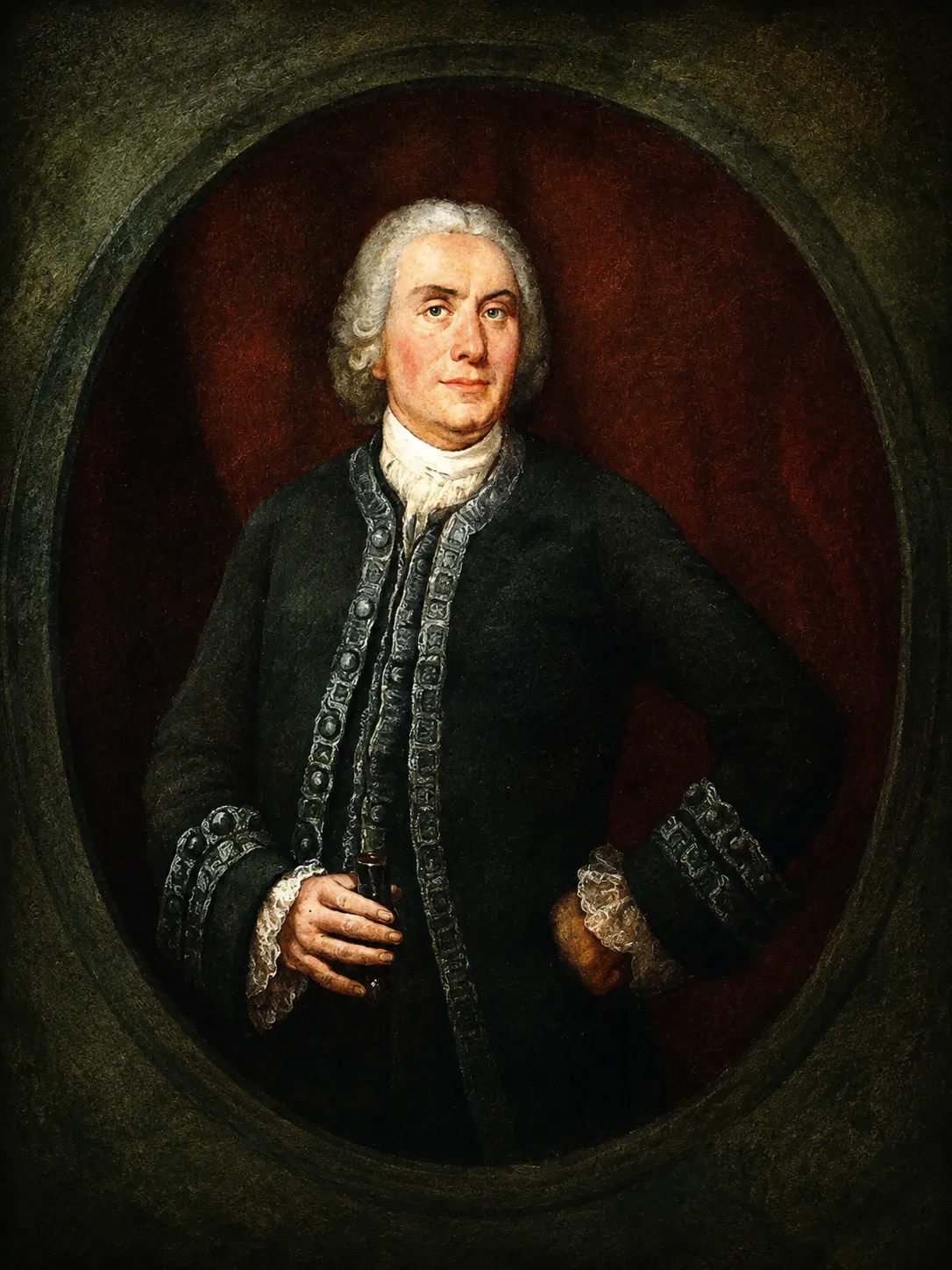
Open since 1757, facing the palace where the parliament would sit. Cavour ate here as a regular; the Sala Risorgimento still has his view and its original, creaking parquet. Agnolotti del plin and vitello tonnato done as they were written down, and a seventeenth-century cellar sixteen metres below the square.
A night at the Regio or the Carignano
The capital's other drawing rooms. The Regio is Juvarra's façade with Carlo Mollino's astonishing 1973 interior behind it; the Carignano, two minutes from our door, is the eighteenth-century horseshoe in red and gold. Book the seats before the trip — and tell us, so we can book you a table for after. Turin dines late on theatre nights.
Tre Galline, Via Bellezia
One of the oldest inns in the city — nobody can now say whether the street took its name from the restaurant or the other way round. Ring the bell, climb four steps, and sit down to Turinese classics: bagna cauda, agnolotti al sugo d'arrosto, finanziera, and a trolley of bollito or roasts that changes with the evening.
The river, the hill, the Lingotto
From the top of the Mole to a racetrack on a roof — with a basilica on a hill, if you want one.
-
Morning9.00 – 12.30
The Mole Antonelliana
Begun in 1863 as a synagogue and finished in 1889 at 167.5 metres, the symbol of the city now holds the National Cinema Museum, spiralling up around the void. Take the glass lift — fifty-nine seconds straight through the dome — to the terrace at eighty-five metres, and the Alps line up behind the rooftops. The lift sells out: book it.
Superga, by rack tramway
Tram 15 out to Sassi, then the only rack tramway of its kind in Italy: eighteen minutes, gradients of twenty-one per cent, two carriages of 1884 still in service. At the top, Juvarra's basilica of 1731, the Savoy tombs beneath it and the whole arc of the Alps. On Wednesdays the line rests and bus 79/ does the climb.
-
Lunch12.45 – 14.15
PlinTO, Via Maria Vittoria
An agnolotteria and nothing else. The plin is the small pinched raviolo of the Langhe, and here it comes in every version there is — the traditional roast filling, vegetarian, frankly heretical, and a sweet one to finish. Half portions, so order three. Quick, cheap and very good.
Focaccia in the Roman quarter
Along Via Palazzo di Città into the Quadrilatero, and lunch for a few euros at the Focacceria Genovese Sant'Agostino: proper Genoese focaccia, the paper-thin cheese focaccia of Recco and farinata from a beechwood oven. Liguria is ninety minutes away, and it shows.
-
Afternoon14.30 – 18.00
Lingotto: the track on the roof
Metro to the Lingotto, the cathedral of the motor car that Fiat built in the 1920s. The first Eataly in the world opened here in 2007 inside the old Carpano vermouth works, and upstairs the free Museo Carpano runs from 1786 to now. Then Renzo Piano's Scrigno and the Pinacoteca Agnelli — Canaletto, Manet, seven Matisses — and out onto the Pista 500, the old test track, now a garden.
The side streets and the diagonal
Via Garibaldi for the shops, then abandon the plan: Via Barbaroux, Via Stampatori, the small green of the Giardino La Marmora, Piazza Solferino. Come home along Via Pietro Micca, the only diagonal in a city built on right angles, lined with the best belle-époque fronts in Turin.
-
Aperitivo18.30 – 20.00
House of Carpano, on the track
Stay on the roof. Carpano now pours on the old test track itself, twenty-eight metres up — in the city where the first glass of vermouth was served in 1786. Ask for a Reverse Manhattan, and watch the Alps go pink.
Peliti's, then the last light
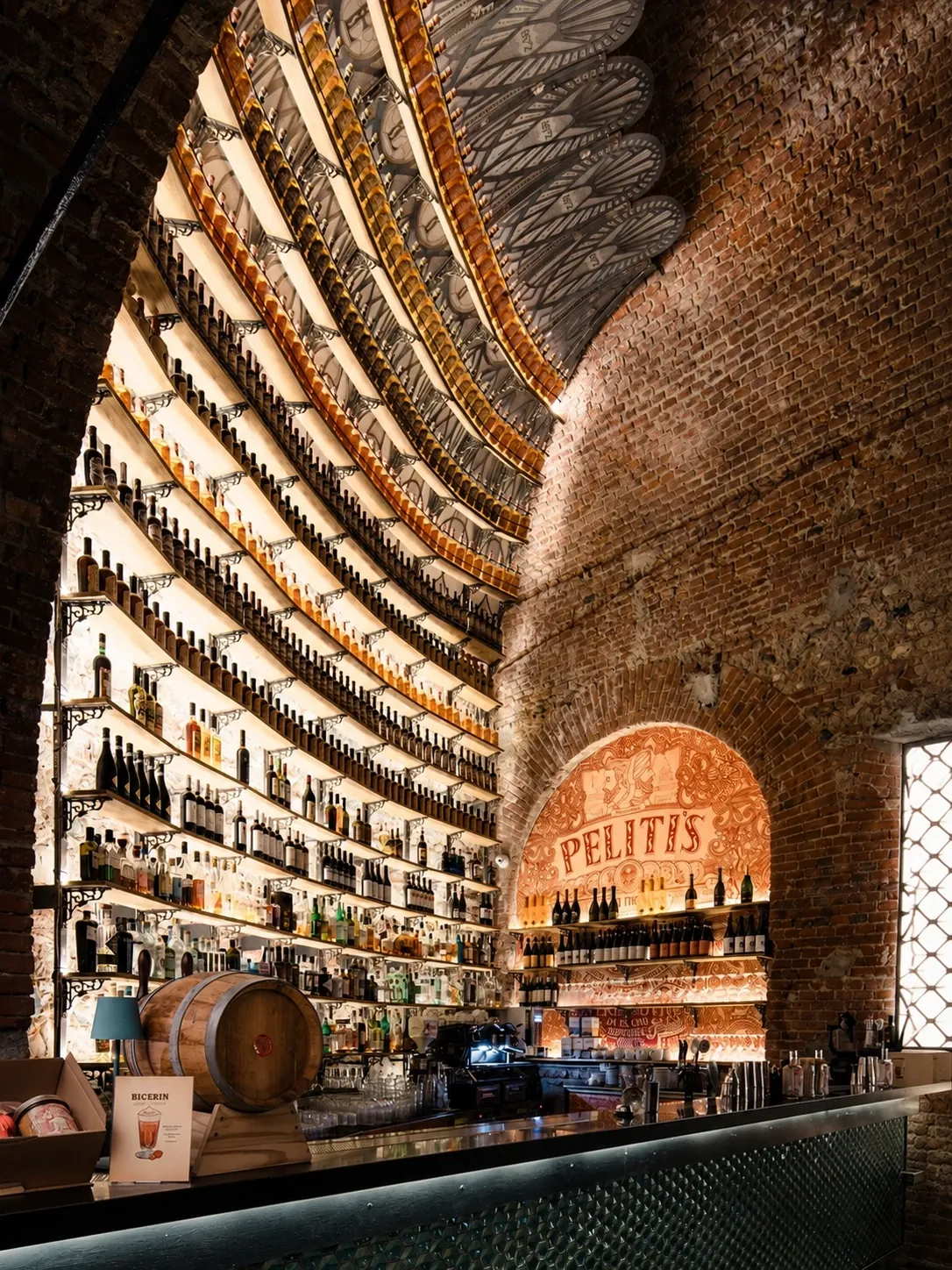
A rosso, neat, at Peliti's — an old boathouse under the Murazzi, from a recipe made in 1877 for the future Edward VII. Then cross Ponte Umberto I and climb to the Monte dei Cappuccini for the last half hour of light: the Mole in the middle of the city, the Alps behind it. Work backwards from sunset.
Caffè Elena, Piazza Vittorio
A flight of vermouths at a red breccia table under the arcades of the largest porticoed square in Europe, in a café open since 1889 that still carries the painted Carpano sign above the door. Between 1899 and 1902 the Carpano family worked out how to make their vermouth industrially in this room. Look down the square to the Gran Madre across the river.
-
Dinner20.30 – late
La Pista, in the middle of the track
Dinner on the old circuit, with the Alps on one side and Piano's glass box on the other, a contemporary kitchen and a long cellar behind it. Book ahead, and check the last metro before the second glass — otherwise a taxi has you home under the arcades in fifteen minutes.
Scannabue, San Salvario
The neighbourhood that changed Turin's mind about itself, and its institution since 2008: vitello tonnato, agnolotti del plin, guancia brasata al Barbera, in a room that is serious about food and not at all solemn. Nobody here is in a hurry to go home.
Signorvino, Via Lagrange
A wine shop that decided to cook: some fifteen hundred Italian labels at cellar prices, by the glass or the bottle, with boards, focaccia and a short menu. The Via Lagrange branch occupies a Methodist church of 1897, with the best tables under the dome; the one in Piazza Vittorio has the terrace and the view of the Gran Madre.
Tap an alternative to swap it in. Red means closed on that day.
Staying with us? Send us the plan and we will reserve what needs reserving.
What closes when
This is the table behind the planner, and the one we wish someone had handed us the first time. Turin's museums are run by different bodies — the State, the city's foundation, private foundations — and each picked its own day of rest. If you pick a day in the planner, the two columns of your trip light up below.
The week at a glance
Turin's closing days, sight by sight
| Sight | Mon | Tue | Wed | Thu | Fri | Sat | Sun |
|---|---|---|---|---|---|---|---|
| Museo Egizioshorter hours on Monday | Morning | ● | ● | ● | ● | ● | ● |
| Musei RealiRoyal Palace, Armeria, Sindone | ● | ● | Closed | ● | ● | ● | ● |
| Palazzo Madama | ● | Closed | ● | ● | ● | ● | ● |
| Museo del RisorgimentoPalazzo Carignano | Closed | ● | ● | ● | ● | ● | ● |
| Mole & Cinema Museumand panoramic lift | ● | Closed | ● | ● | ● | ● | ● |
| Pinacoteca Agnelliand Pista 500 | Closed | ● | ● | ● | ● | ● | ● |
Regular days of rest. Public holidays, evening openings and exhibitions change them: confirm on the official site before you set out.
Two more notes. The Museo Egizio sells entries by the half-hour, and the first slot of the day is the only time the Gallery of Kings is quiet: book it before you travel. And if you want a bicerin — coffee, chocolate and cream, layered in a small glass — have it where it was invented, at Caffè Al Bicerin in Piazza della Consolata, ten minutes from Piazza Castello, where it has been poured since 1763. It closes on Wednesdays.
Where to stay for a weekend in Turin: the case for the centre
Look at the walking times in the planner and a pattern appears: everything on the first day sits within five minutes of Piazza Castello, and the second day starts from there too. Turin is a compact city whose historic centre was built for walking under cover; the moment you sleep outside it, a two-day trip becomes a two-day trip with commuting. Sleep near the square, and the city does the rest.
Practical
Getting to Turin, and getting around
By train
About an hour from Milan by high-speed train, with direct services from Rome, Florence, Bologna and Venice into Porta Nuova and Porta Susa. Direct trains from Paris come through the Fréjus tunnel in about five and a half hours.
By air
Torino Caselle is linked to Porta Susa station by train in about thirty minutes; buses reach Porta Nuova and Porta Susa in around forty-five. Milan's airports are an alternative, with direct coaches to Turin.
By car
Motorways arrive from Milan, Genoa, Aosta and France. Much of the historic centre is a limited-traffic zone (ZTL) watched by cameras: leave the car in a garage and forget about it until you leave.
In the city
Walk — the whole of Day 1 is on foot. For Day 2, metro line 1 runs from Porta Nuova to Lingotto, and tram 15 from Piazza Castello takes you to Sassi for the Superga tramway.
The card
The 48-hour Torino+Piemonte Card covers more than eighty museums, including most on this plan. With it, the Tourist Office in Piazza Castello sells a discounted public transport ticket.
Book before you go
The Museo Egizio's first entry, the Mole's panoramic lift, dinner at Del Cambio or La Pista, and any theatre seats.
When to go: Turin through the year
There is no wrong season for Turin, only different ones. The arcades mean the weather matters less than elsewhere, and the city's calendar is full in every quarter. These are the moments that come round every year.
- Spring
The best light of the year. The Alps stand sharp at the end of every street and the café tables come back out under the porticoes. In late April the Torino Jazz Festival fills the squares, and in May the Salone Internazionale del Libro, Italy's great book fair, takes over Lingotto.
- Summer
The river season. Evenings stretch out on the Murazzi and in the Valentino, and the aperitivo moves outdoors. On 24 June the city celebrates its patron saint, San Giovanni, with fireworks over the Po. August is quiet and hot: many locals leave, and the museums are yours.
- Autumn
The table at its richest. September brings MITO SettembreMusica to the city's churches and halls; October and November bring the white truffle season in the Langhe, an hour to the south. In early November Artissima, the contemporary art fair, turns the whole city into a gallery, and the Torino Film Festival follows.
- Winter
The city's secret. From late October to January the Luci d'Artista light installations dress the streets and squares, as they have every winter since 1998. Misty mornings, long lunches, early aperitivi, a bicerin to warm up — and museums without queues.
Turin lost the capital and kept the furniture.
It is the line we come back to whenever someone asks why Turin and not somewhere better known. A city that was briefly the capital of a new country, and then deliberately stopped being one, has an unusual quality: the scale of a capital and the pace of a provincial town. The palaces are there and the queues are not. The cafés where a nation was argued into being still serve breakfast to people reading the paper. And at six in the evening, under the arcades, a thousand counters pour the drink the city invented, as if nothing had happened since 1786.
Two days will not exhaust it. They are not meant to. They are meant to show you which door you will want to open next time.